Prototype Overview
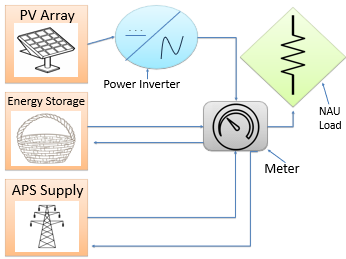
The prototype must be implemented into the grid, to reduce peak demands during the day and lower the expenses of generation prices during demand intervals. Instead of approaching each component separately, our team emphasizes system-wide integration:
- Solar photovoltaic (PV) generation.
- Thermal energy storage (TES).
- Merging the systems into the grid supplied by APS.
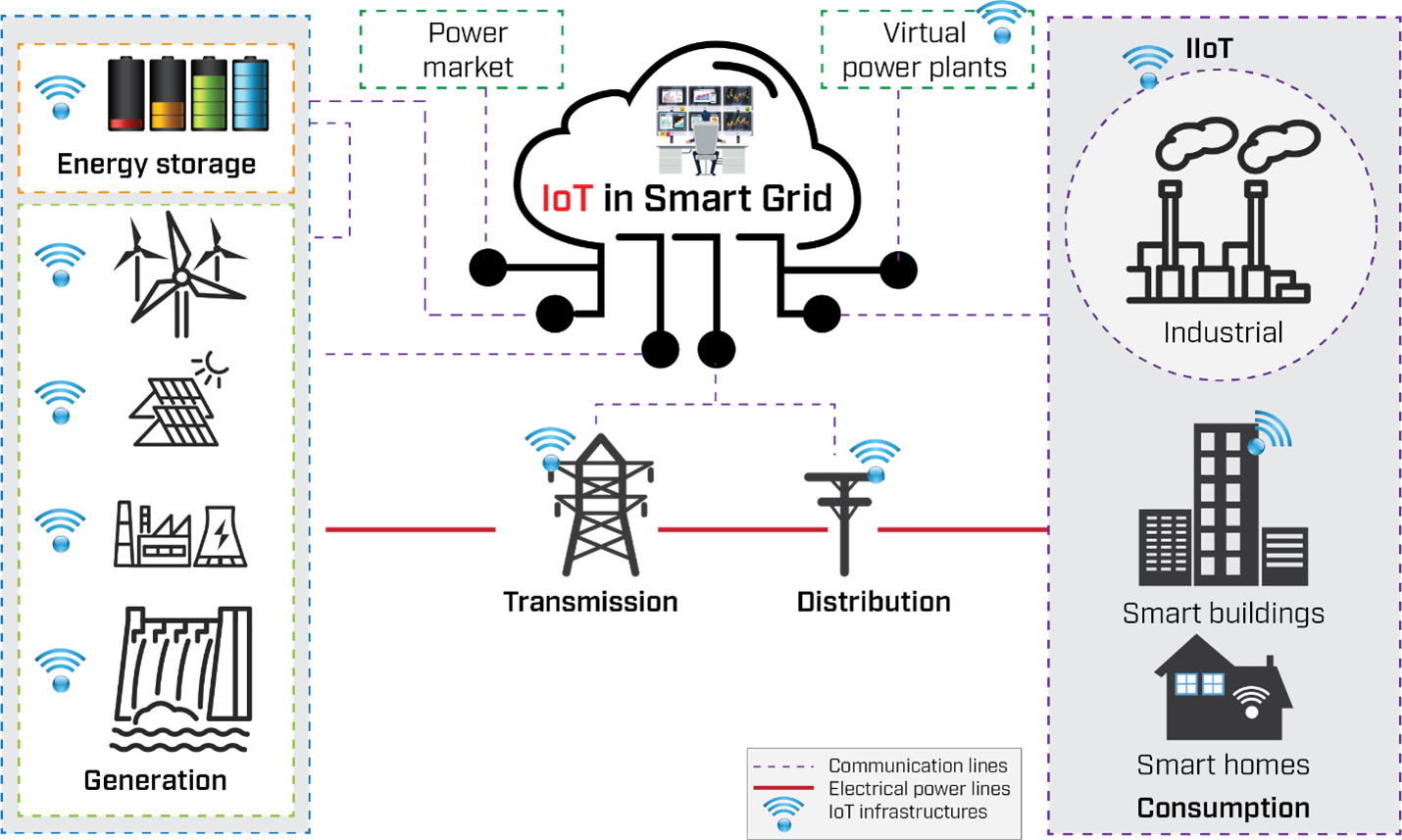
- Smart grid and Internet of Things (IoT) monitoring.
The prototype serves as a scaled model for how NAU might manage future campus operations, for example we have charging storage during off-peak periods, utilizing renewable energy as the primary source, and discharging at certain times to mitigate peak-demand events.
Thermal Energy Storage
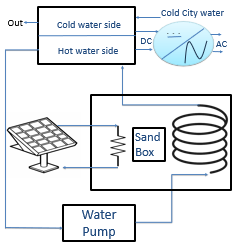
An essential component of our renewable-focused design is thermal energy storage. Our prototype would captures heat within sand or similar solid media and release that heat into a heat exchanger when demand is increasing. This strategy:
- Stores energy as heat during off-peak or high-renewable periods.
- Releases heat later, reducing the need for electric heating during peak hours.
- Provides a safer, lower-cost alternative to large chemical battery banks.
By demonstrating TES at a prototype scale, we can view its performance and lifecycle costs alongside traditional battery storage while also showing the environmental advantages of using a low-impact storage medium.
Thermal Energy Prototype
The video below shows the peltier thermoelectric effect in practice and demonstrates that when one side is given enough heat it can produce a voltage and in this case light a strip of 5V LEDs.
Smart Grid & IoT Controls
The proposal emphasizes that peak reduction depends on more than hardware. Smart grid and IoT technologies provide:
- Real-time measurements of power, voltage, and current at key campus locations.
- Monitoring of storage state-of-charge and TES temperature profiles.
- Control signals to schedule loads and dispatch storage when demand is approaching a peak.
The prototype uses microcontrollers, sensors, and communication links to mimic how a full campus energy management system could operate under IEEE-based communication standards.