 Phase I: Van de Graaff High-Voltage Evaluation
The first stage of the project focuses on assessing whether a Van de Graaff generator (VDG) can produce field strengths sufficient to contribute to CO₂ bond disruption.
Key objectives:
- Measure maximum achievable voltage
- Evaluate stability and discharge behavior
- Quantify energy throughput
- Assess feasibility for CO₂ excitation and plasma formation
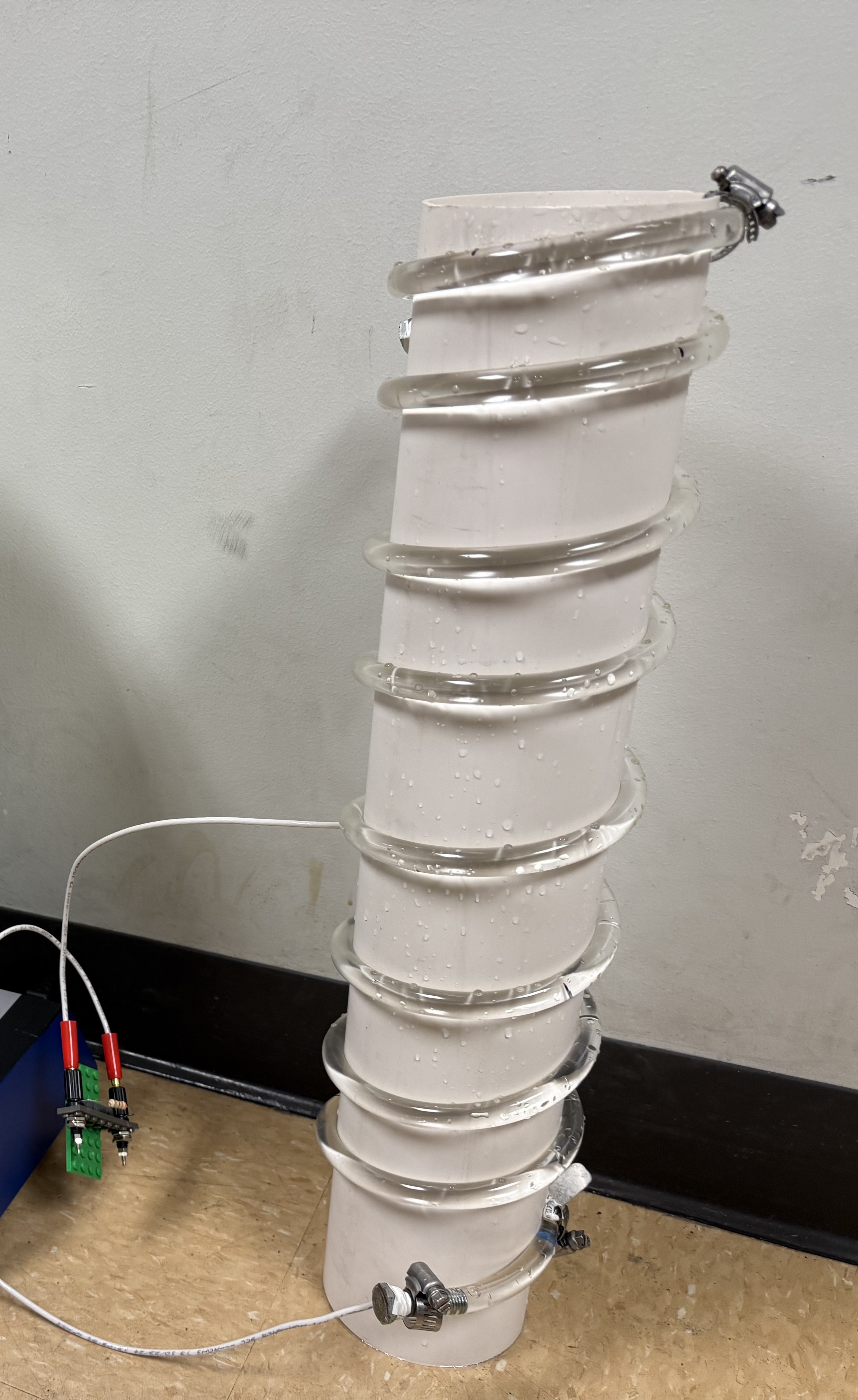
To ensure accuracy and safety, our team is in the process of constructing a liquid high-voltage divider, enabling measurement of multi-hundred-kilovolt potentials.
 Limitations of Open-Air VDG Dissociation
Preliminary analysis and prior NAU work indicate that open-air VDG operation is not sufficient for meaningful CO₂ dissociation:
- VDGs provide high voltage but very low current, limiting energy per pulse.
- Open-air discharges result in negligible dissociation due to low energy density.
- Dissociation products rapidly recombine without temperature and pressure control.
- Past NAU Car Filter teams reported no measurable CO₂ conversion under atmospheric conditions.
These findings motivate the transition to Phase II, where environmental control becomes central.
 Phase II: Controlled CO₂ Reaction Chamber
The core of Phase II is a modular, heatable, pressure-regulated reaction chamber designed to address the limitations of open-air discharges.
Planned capabilities include:
- High-temperature operation to reduce required bond-breaking energy
- Adjustable pressure to study Paschen behavior and plasma stability
- Interchangeable and adjustable electrodes for rapid testing of power-delivery methods
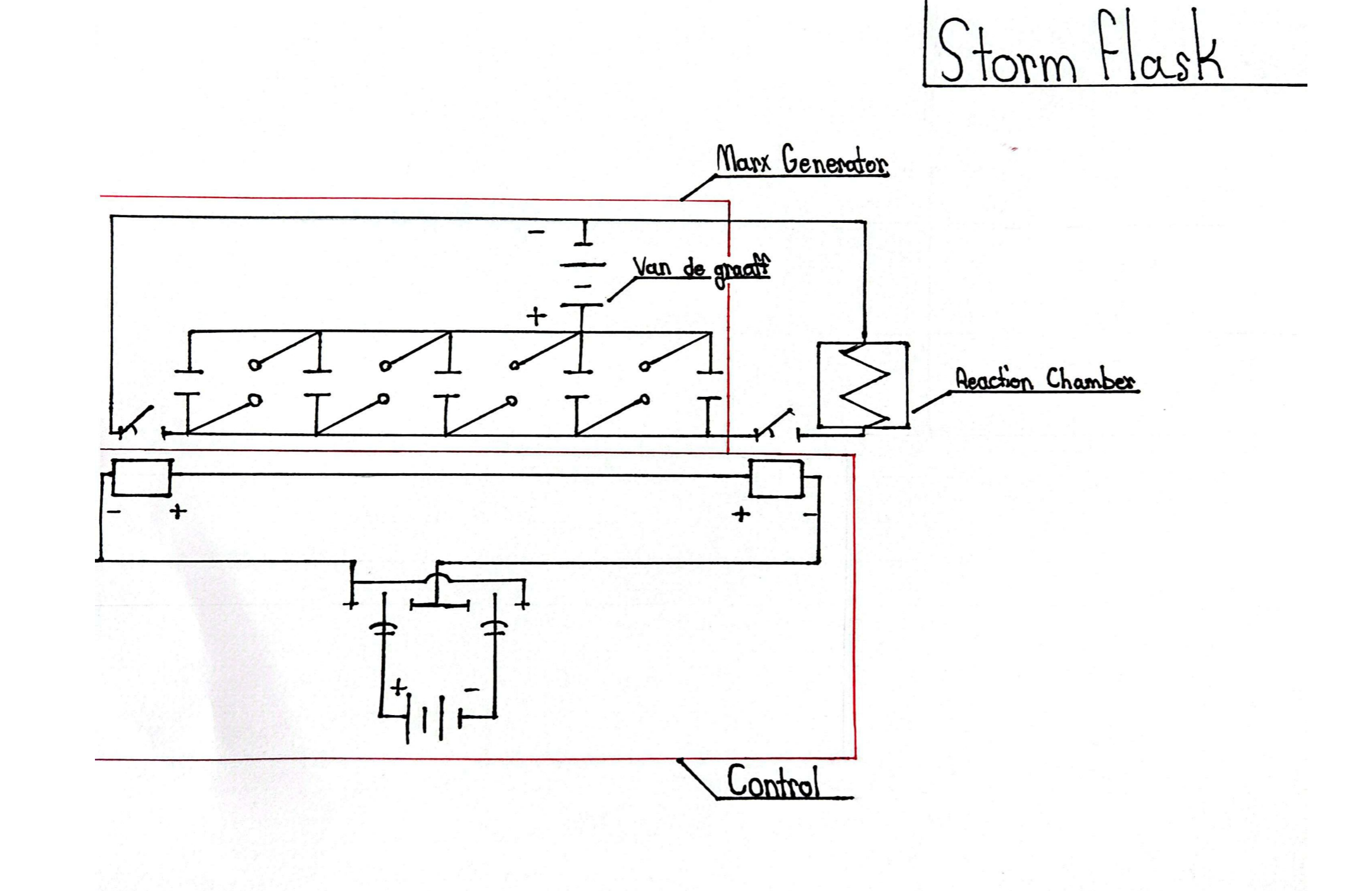
- Modularity for future integration of Marx generators, RF or microwave excitation, and higher-current pulsed systems
- Optical access for spectroscopy and plasma diagnostics (future capability)
This system enables direct investigation of thermally assisted and plasma-enhanced CO₂ dissociation under controlled conditions.
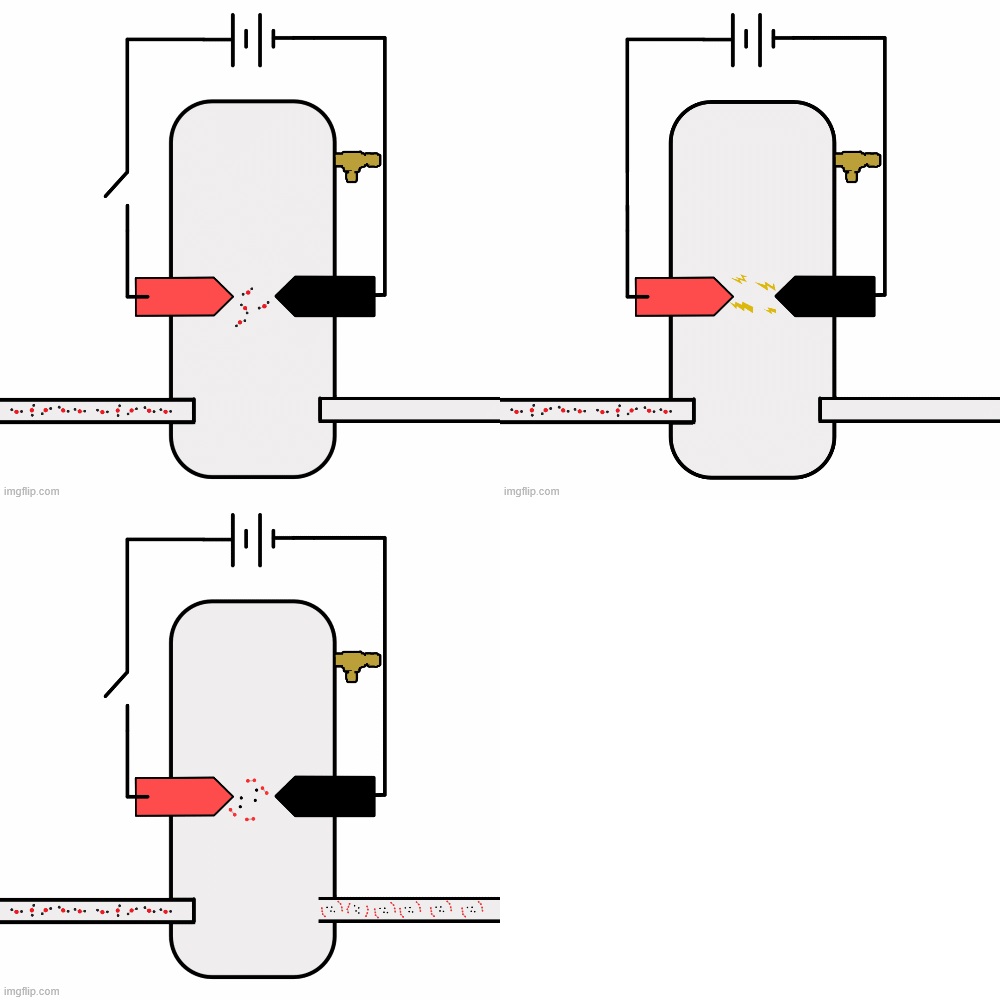
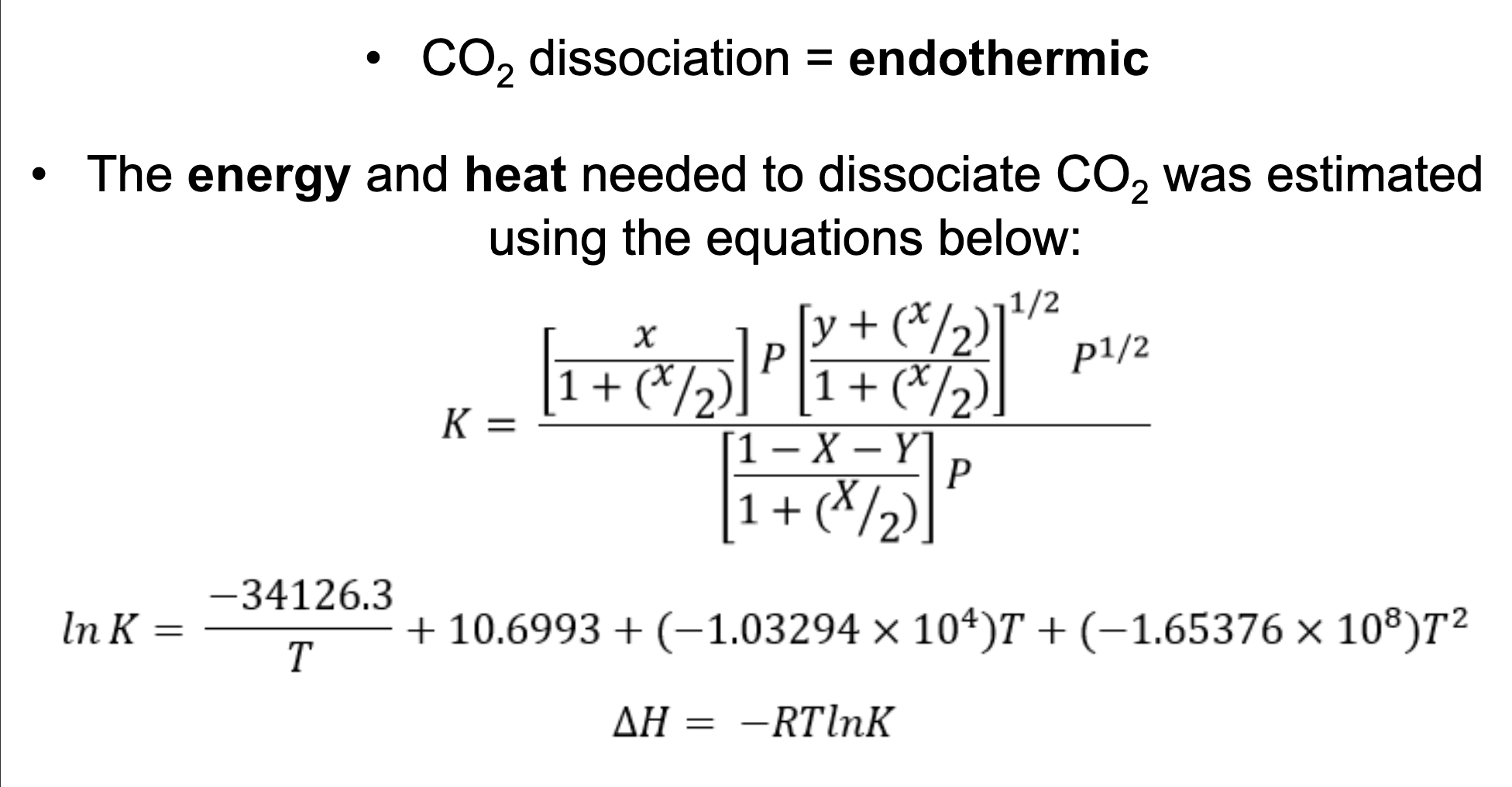
 Experiment Diagrams & Formulas
Visuals help communicate how the system is arranged and what physics it targets. As more data and models become available, this section can grow with additional images.
 Standards-Based Safety
Standards, Safety & Compliance
The experimental design follows established engineering and laboratory safety standards, including:
- OSHA 29 CFR 1910.333 – Electrical safety and work practices
- OSHA 1910.104 – Pressurized and compressed gases
- IEEE 510 – Safety in high-voltage and high-power test areas
- IEEE 433 – High-voltage measurement techniques
- ANSI Z535 – Hazard signage and communication
- ASME BPVC Section VIII – Pressure-vessel considerations
- ASTM dielectric and insulation standards (e.g., D149, D150, D257)
All high-voltage testing will be performed in a restricted-access, grounded, shielded environment with appropriate PPE, interlocks, and documented procedures.